
Nutrient Neutrality Assessment
Nutrient Neutrality Assessment
Expert technical assessments (NNAMS) and Shadow Habitats Regulations Assessments (sHRA) strategies that planning authorities accept - from single dwellings to strategic allocations across England's designated nutrient neutrality catchments.
Overview
WCI Nutrient Neutrality bridges the gap between complex environmental legislation and practical wastewater engineering. Delivering support for over 1,500 development planning approvals across the UK.
From self-builds to strategic housing allocations, we provide developers with a robust, data-driven methodology to calculate their nutrient budget and crucially, a viable strategy to mitigate it.
A comprehensive NNAMS services combining:
Phosphate impact calculation
Using accepted methodologies (Royal Haskoning DHV, Ricardo).
Mitigation strategy development
Identifying viable offset solutions.
sHRA
Shadow Habitats Regulations Assessment expediting planning determination.
LPA-specific formatting
Meeting individual authority requirements
Cost guidance
On mitigation options for development appraisal.
Planning submission support
Coordinating with consultants and responding to queries.
Whether your project is a single dwelling or a strategic multi-phase development, our reports are designed to satisfy the rigorous standards of Natural England and Local Planning Authorities (LPAs).
Without a professional NNAMS, your project faces:
- Automatic Planning Refusal
- Failure to address nutrient impact is a common ground for application rejection
- Indefinite Delays
- Incomplete or non-defensible reports lead to cycles of “Requests for Further Information” from statutory consultees.
- Costly Rework
- Retrofitting a drainage or mitigation strategy late in the design process is significantly more expensive than building it in from the start.

The WCI Difference - Engineering-Led Expertise
While many firms offer desk-based environmental consulting, WCI Nutrient Neutrality brings a unique wastewater engineering pedigree to every report:
National Reach, Local Knowledge
We provide NNAMS for catchments across the UK, from the Solent to the Tees, adapting our strategies to specific local authority requirements.
Defensible Science
Our reports are built on robust calculation methodologies and real-world engineering data, making them harder for planning officers to challenge.
Vertical Integration
With projects in the South West, we don't just identify the problem - we can provide the solution. If on-site mitigation is proposed, WCI Group can design and install wastewater treatment or wetland solutions offering complete accountability from assessment through to delivery.
For projects specifically in the Somerset & Dorset, we can provide our own phosphate credit supply covering the River Tone, Brue, Axe and Parrett.
Our NNAMS Process:
Understanding the Phosphate Balance
NNAMS calculates your development’s phosphate balance – the net change in phosphate loading from your site compared to its existing use. This assessment considers two primary sources:
- Land Use Change: Development typically converts agricultural land or greenfield sites to residential/commercial use. Different land uses generate different phosphate contributions to watercourses through surface runoff.
- Wastewater (Occupancy) Change: New development creates additional wastewater containing phosphate from human
Calculation Methodologies
WCI uses accepted calculation approaches that LPAs and Natural England recognise:
- Royal Haskoning DHV Method: Provides standardised phosphate budget calculations with conservative assumptions ensuring robust assessments.
- Ricardo Method: Promoted by Natural England as best-practice approach. Uses updated phosphate contribution factors and refined occupancy assumptions.
- LPA-Specific Requirements: Some authorities have bespoke calculation requirements or preferred methodologies. WCI Nutrient Neutrality tailors NNAMS to individual LPA expectations, avoiding resubmission delays.
We handle all calculations, you provide basic development information (dwelling numbers, bedroom counts, wastewater strategy), and we produce compliant phosphate assessments.
The Mitigation Strategy
Once phosphate balance is calculated, NNAMS identifies how any residual phosphate impact (the amount requiring offsetting) will be mitigated to achieve neutrality. Mitigation options include:
- Off-Site Phosphate Credits Purchasing credits from providers such as WCI Nutrient Neutrality P-Credits. Credits represent permanent phosphate reductions achieved elsewhere in the catchment.
- On-Site Mitigation Implementing phosphate reduction measures within the development boundary through constructed wetlands, enhanced wastewater treatment or surface water management.
- Land Use Mitigation Changing land use on third-party land to reduce phosphate contributions such as taking agricultural land out of production (fallowing), woodland creation or wetland restoration.
Our NNAMS reports assess viable mitigation options for your specific development, providing cost guidance that informs development appraisal and procurement decisions.
Shadow Habitats Regulations Assessment (sHRA) Integration
WCI Nutrient Neutrality provides integrated NNAMS + sHRA reporting, ensuring:
- Consistent assessment between phosphate calculation and habitats impact
- Comprehensive documentation supporting planning determination
- Single point of accountability for nutrient neutrality compliance
- Expedited LPA review (no waiting for separate sHRA procurement)
WCI includes sHRA with all NNAMS reports where required, expediting planning authority review and avoiding determination delays from incomplete submissions.
Is Your Development in a Nutrient Neutrality Catchment?
In designated catchments, planning applications are effectively “on hold” until nutrient neutrality can be demonstrated. Local Planning Authorities (LPAs) in designated nutrient neutrality catchments cannot determine applications without NNAMS demonstrating phosphate neutrality. This applies to:
Developers & Landowners
Residential developers, commercial developers, self-builders and landowners promoting sites in nutrient neutrality catchments require NNAMS for planning approval.
WCI Nutrient Neutrality provides:
- Phosphate assessment supporting planning applications
- Mitigation cost guidance informing development appraisal and land acquisition
- Expedited NNAMS delivery aligning with submission deadlines
Planning Consultants & Architects
Planning consultants managing applications in affected catchments can commission NNAMS from WCI Nutrient Neutrality as specialist sub-consultants.
WCI Nutrient Neutrality provides:
- Technical nutrient neutrality expertise complementing planning knowledge
- LPA-specific formatting and submission requirements
- Responsive coordination during planning determination
Land Agents & Estate Agents
Agents promoting land or properties in nutrient neutrality catchments benefit from early NNAMS to demonstrate development viability.
WCI Nutrient Neutrality provides:
- Indicative phosphate offset requirements for land marketing
- Mitigation cost estimates supporting land valuation
- Technical credibility reassuring potential purchasers
Public Sector & Housing Associations
Local authorities, housing associations, and public bodies developing in affected catchments require NNAMS for their own schemes.
WCI Nutrient Neutrality provides:
- Professional NNAMS services meeting public procurement standards
- Competitive pricing and transparent cost structures
- Experience with public sector planning processes
Affected Areas: National Scope
As of 2025, 74 Local Planning Authorities across 27 river catchments covering approximately 14% of England's land area face nutrient neutrality requirements.
It's not LPA boundaries that determine requirements - it's specific river catchment designations by Natural England under the Conservation of Habitats and Species Regulations. Need guidance? Speak to the WCI Nutrient Neutrality team today.
WCI Nutrient Neutrality provides NNAMS services nationwide across all affected catchments, with particular expertise in:
| Area | Catchments |
|---|---|
| Somerset & Dorset | River Tone catchment River Parrett catchment River Brue catchment River Axe catchment |
| Devon & Cornwall | River Teign catchment Exe Estuary catchment Taw-Torridge catchment Camel catchment |
| Wiltshire & Hampshire | River Avon catchment (Hampshire) Somerset Levels & Moors Poole Harbour catchment |
| Other Affected Catchments | Solent (multiple catchments) Norfolk Broads Stodmarsh (Kent) Lake District catchments And others as designated by Natural England |
Catchment boundaries are complex and don't align neatly with LPA or county boundaries. Development sites near catchment edges or in areas with multiple watercourses may face uncertainty.
Contact WCI Nutrient Neutrality with your site postcode or location - we'll verify Natural England catchment designation and confirm whether NNAMS is required for your planning application.
Similar Projects
 Nutrient Neutrality Assessments
End-to-End Nutrient Neutrality Delivers Planning Approval for a 66-Bed Care Home
A 66-bed care home in Taunton needed both a NNAMS and phosphate credits to unlock planning consent. WCI Nutrient Neutrality provided both – and planning was approved in March 2025.
 Nutrient Neutrality Assessments
Five Days to Save a Planning Application When the Original Mitigation Scheme Fell Through
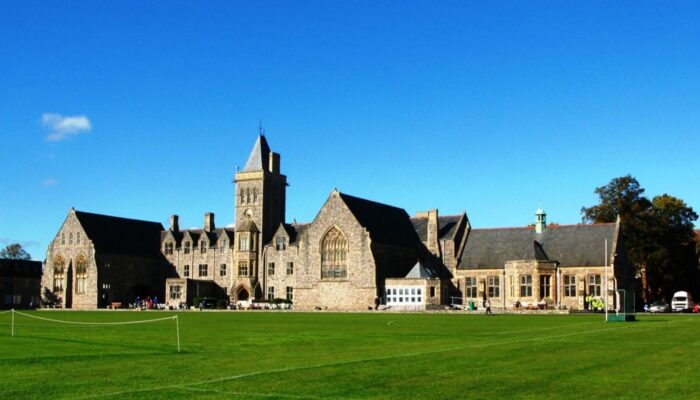
Years of planning work were at risk when Taunton School’s mitigation scheme collapsed. WCI Nutrient Neutrality stepped in with credits and a NNAMS – in five days.
 Nutrient Neutrality Assessments
No Development Too Small – CPA Signed in 7 Days for a Rural Conversion
A rural building conversion in Shepton Mallet needed nutrient neutrality. Three services, two WCI divisions, one seamless outcome – CPA signed in seven days.
WCI Nutrient Neutrality - No Nonsense Nutrient Neutrality™
Secure your technical assessment today and keep your development moving. Request a NNAMS Quote Call 01984 623 404 for catchment verification.

Discuss Your Drainage Design Requirements
Get in Touch