
Phosphate Credits
Phosphate Credits
For council-approved phosphate credits to be used in Somerset river catchments, you can purchase them directly from WCI. We hold credits in stock across all four catchments, immediately available for purchase. Speak to the WCI team today to secure your credits.
Get Phosphate Credits Call 01984 623 404
Overview
If your development sits in the Dorset Parret catchment or a Somerset nutrient neutrality catchment (River Tone, Brue, Axe, and Parrett), you will need to buy phosphate credits to discharge your planning condition.
A phosphate credit (also known as a P-credit) is an environmental offset that allows developers to neutralise the phosphate pollution created by commercial or new housing projects. With every credit used, 1kg of phosphate is removed from river catchments per year.
Market-Leading Commercial Terms
When you purchase credits with WCI, you will have access to our stock at any time, across all four catchments. There are no waiting lists or delays to the programme, so you can purchase immediately without constraint.
Lowest Cost in Market
WCI’s phosphate credits are consistently at or below Somerset Council rates where credits are always available.
Buy Now & Secure Your Credits
Reserve your phosphate credits immediately and keep your project moving.
‘Pay Later’ with 10% Deposit
Then annual interim payments with a Notice Payment/Final Payment due post approval.
Bespoke Commercial Terms
For large outline permissions or complex phased developments we offer deferred payment structures with minimal upfront exposure.
Granular Purchasing
Credits sold in 0.01kg increments (minimum 0.1kg purchase). Pay for exactly what your NNAMS calculation requires, no forced bulk purchases or credit waste.
Bridging Credit Options
Temporary credits with commercial terms recognising potential regulatory changes (anticipated 2030).
Useful for outline permissions where permanent solution timing remains uncertain.
With our competitive pricing, you can speak to our team to find out what our current pricing is compared to other credit suppliers. We also aim to make the credit purchasing process easy and fair with our flexible payment terms, which you can arrange when you wish to purchase immediately.
Why Phosphate Credits Matter
Planning Applications Cannot Proceed Without Mitigation
Planning Applications Cannot Proceed Without Mitigation
Local Planning Authorities (LPAs) in affected catchments cannot grant permission for a development that increases phosphate loading unless impacts are fully offset. This includes:
- Residential developments, from single dwellings to strategic allocations
- Commercial developments with overnight accommodation
- Tourism and leisure facilities
- Any development creating an additional wastewater phosphate load
The Environment Agency, Natural England, and all LPAs operate under the Habitats Regulations (The Conservation of Habitats and Species Regulations 2017). Phosphate mitigation is mandatory for approval.
How WCI Nutrient Neutrality Phosphate Credits Work
A phosphate credit represents a measured reduction in phosphate achieved elsewhere in the same catchment, typically by upgrading a septic tank to a modern sewage treatment plant. Each credit you purchase is backed by traceable property upgrades delivering the reduction – not theoretical land management or unenforceable agreements.
Nutrient Neutrality Assessment (NNAMS)
WCI’s in-house Consulting Engineers calculate your development’s phosphate impact using accepted methodologies.
WCI can also provide NNAMS services if your consultant doesn’t offer this.
Credit Procurement
Based on your NNAMS requirement, we provide a formal credit quotation:
- Exact credit quantity (to 0.01 kg precision)
- Total cost at current market rate
- Payment structure options (upfront, deferred, or bespoke)
- Credit type (permanent or bridging)
Then a Commercial Agreement: Once terms are agreed, we formalise via purchase agreement securing your credits against our available supply.
Approval & Payment
Once planning permission is granted (or earlier, depending on payment terms negotiated):
- Balance payment becomes due per commercial agreement
- Credits are formally registered with Somerset Council
- Your development can proceed to discharge pre-commencement conditions
We are a council-listed supplier listed in all four catchments, meaning that any credits purchased from us are valid for planning condition discharge. A developer needs to purchase enough credits to offset the phosphate load their development will generate, which is calculated with a Nutrient Neutrality Assessment Management Scheme (NNAMS) assessment.
Which Catchments Are Covered
WCI’s nutrient neutrality credits cover all four catchments in Somerset:
- River Parrett, the largest catchment, covers central and south Somerset, which also includes the former districts of South Somerset and Sedgemoor.
- River Tone covers the Taunton and Wellington area.
- River Brue makes up the Mendip Hills area.
- River Axe Somerset catchment.
Open the Natural England Phosphate River Catchments- Interactive Map
If you are planning or directing a project and are unsure whether your site is in a catchment area, The WCI Nutrient Neutrality team can help. By speaking to our team, you can identify whether you need to purchase phosphate credits for your project and purchase them immediately if required.
How to Buy Credits from WCI
Over 1,500+ developments unlocked for clients that include: National housebuilders, regional developers, self-build homeowners, commercial developers (hotels, care facilities), public sector (schools, council developments), land promoters, and strategic site allocations.
Stage 1
Contact our team with your site details, including the catchment, planning references, and estimated development size
Stage 2
Our team calculates your phosphate requirement, coordinating this with a NNAMS assessment if one is needed.
Stage 3
We then confirm credit availability, the price, and payment structure, offering flexible terms if necessary.
Stage 4
A Credit Purchase Agreement (CPA) is issued, and for flexible schemes, payment terms are structured accordingly as agreed.
We have enabled planning approval for over a thousand developments across Somerset’s affected catchments, from single self-build dwellings to strategic housing allocations.
Our track record shows proven delivery across diverse project types, scales and LPA jurisdictions.
The WCI Difference: Proven, Dependable, Cost-Effective
Originators of the Septic Tank Credit Model
WCI's Managing Director, Brad Taylor, pioneered the septic tank upgrade phosphate credit approach - signing the landmark agreement with Somerset Council that established this methodology. What's now replicated nationwide originated here, refined through years of practical delivery.
This isn't opportunistic market entry - we created this market and understand the technical, regulatory and commercial complexities that defeat less experienced operators.
Planning Authority Recognition
Our methodology is established, novel or unproven mitigation strategies face scrutiny, delays and potential rejection. WCI Phosphate Credits are a known quantity - reducing risk that your mitigation strategy becomes a planning objection point.
Natural England, Environment Agency and LPAs have reviewed and accepted our methodology across hundreds of applications. Your planning consultant can submit WCI Nutrient Neutrality mitigation with confidence.
Immediate Availability
Secure credits when your planning application needs them, not when supply logistics eventually align.
WCI Nutrient Neutrality maintains established supply ready for immediate procurement, unlike competitors dependent on uncertain future credit generation.
- No waiting for land fallowing arrangements
- No dependency on future septic tank upgrade identification
- No uncertainty around credit delivery timescales
Track Record and Case Studies
A large project in the River Parrett catchment for Mount Hindrance, Chard, included the development of 295 dwellings and sports facilities. 24.30kg of phosphate credits with CPA payment terms were delivered with a flexible structure.
In the River Tone catchment, Taunton Schools had an original mitigation scheme that collapsed, leaving the developers with little time to recover. Our team was able to provide a full NNAMS assessment and phosphate credits within five days.
Integrated Expertise Across the Value Chain
WCI Group are a vertically integrated water and wastewater engineering business delivering every component of phosphate mitigation.
This vertical integration is unique, competitors broker credits without construction capability or rely on third parties for delivery. WCI Group controls the entire process – from credit calculation through installation to long-term maintenance.
Complete accountability. One company, end-to-end delivery.

NNAMS Report preparation (500+ completed in last year). Drainage strategy and planning submissions. 40+ years navigating planning, Building Control, and environmental regulation.

Septic tank upgrade installation delivering your credits. 40+ years installing treatment plants across Somerset. Construction expertise ensuring upgrades are actually deliverable.

British Water-accredited commissioning and maintenance. Long-term system support ensuring mitigation permanence. Existing relationships with property owners across Somerset catchments.
Similar Projects
 Nutrient Credits
Flexible Credit Terms for One of the Parrett Catchment’s Largest Planning Applications
Up to 295 dwellings, community sports facilities and a neighbourhood hub – Mount Hindrance required significant phosphate credits and commercially flexible terms.
 Nutrient Credits
CPA Signed in 13 Days – Unlocking 220 Homes, Employment Land and a New Rail Station
Nutrient neutrality was the final planning obstacle for a complex 220 home mixed-use scheme in Wellington. WCI Nutrient Neutrality resolved it in thirteen days.
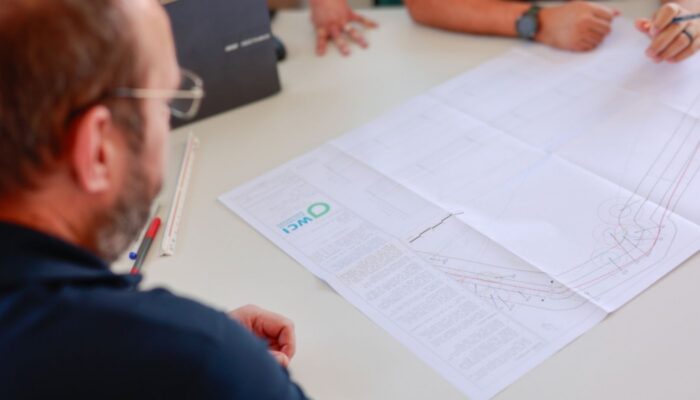 Nutrient Neutrality Assessments
No Development Too Small – CPA Signed in 7 Days for a Rural Conversion
A rural building conversion in Shepton Mallet needed nutrient neutrality. Three services, two WCI divisions, one seamless outcome – CPA signed in seven days.
Purchase Phosphate Credits Today
No Nonsense Nutrient Neutrality™ with WCI. You can purchase phosphate credits for your project in all four catchments in Somerset with WCI today. We calculate the requirement, supply the credits, and install the systems that generate them. Call a member of our team today or send an enquiry to secure your credits. Request a NNAMS Quote Call 01984 623 404 for catchment verification.

Discuss Your Drainage Design Requirements
Get in Touch