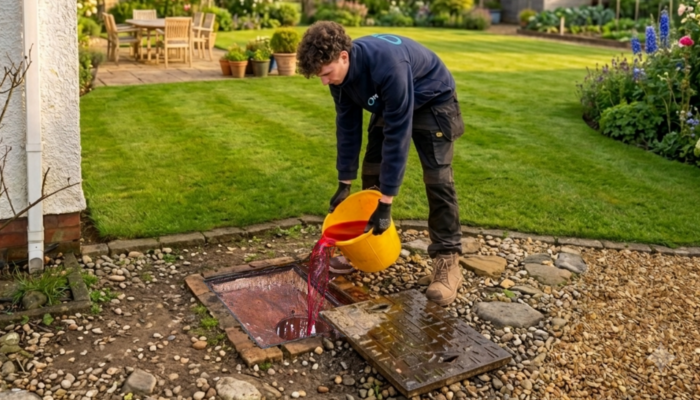
When you’re working on a planning application for a development, especially where overnight accommodation will be required, you’ll likely need to address how you’ll work with nutrient neutrality. If your development is likely to produce excess amounts of phosphate or nitrogen that can pollute protected watercourses, you’ll have to mitigate the load.
This is a legal requirement tied to the Habitats Regulations, and Natural England to offset nutrient pollution. Somerset Council now requires applicants to confirm they have a way to mitigate the phosphate load or will purchase sufficient phosphate credits before development starts.
Before you start your next project, you should first understand what nutrient neutrality is and how you can resolve it if there’s a risk it will stall your development.
What Nutrient Neutrality Means, and Why It Exists
When sewage treatment works discharge treated wastewater into rivers, and that wastewater still carries nutrients like phosphate or nitrogen, this contributes to nutrient pollution.
Rivers and wetlands that open into protected areas where pollution is a concern often have a legal limit before habitat degradation sets in. Unfortunately, many of these catchments are already over that limit.
According to Natural England, nutrient neutrality is a principle applied under the Conservation of Habitats and Species Regulations 2017 that ensures a development plan or project does not add to existing nutrient pollution within catchments.
New developments add roughly the same amount of extra nutrient loads from sources like toilets, showers, and washing machines. This means that under the Conservation of Habitats and Species Regulations 2017, a local planning authority must confirm that a new development won’t contribute to pollution before they can grant permission.
Which River Catchments Are Affected in the UK
Nutrient neutrality currently applies to around 70+ local planning authority areas across England, especially if there’s a catchment feeding into a protected site. The size of these areas can vary depending on the extent of the catchment, so you should ensure you understand the area you’re developing in before you begin.
In the Somerset area, there are protected areas that are currently at risk due to high levels of phosphates entering the water system. Some parts of the county fall within the Somerset Levels and Moors Ramsar catchment, and other smaller parts fall within the River Axe Special Area of Conservation (SAC) catchment. Other catchments in Somerset include:
- River Brue
- River Parrett
- River Tone
To find out if your development may fall within these catchments, you can visit Natural England’s Defra map, which shows all the Somerset catchments and what areas they cover.
How Nutrient Neutrality Affects Planning Permission
If a site is being developed in an affected catchment where it has overnight accommodation, like residential dwellings, then a Habitats Regulations Assessment will need to conclude that the site is nutrient neutral before development can proceed. This assessment is a check that Natural England and local planning authorities use to confirm a scheme won’t contribute to nutrient pollution. Applicants usually support this with a shadow HRA (sHRA), which sets out the nutrient calculations and mitigation.
As of December 2025, Somerset Council no longer requires developers to have phosphate credits purchased and in place before they grant planning permission. Currently, permission can be granted first, with the mitigation process clarified and phosphate credits purchased later.
WCI’s Nutrient Neutrality team can help developers by carrying out a Nutrient Neutrality Assessment Management Scheme (NNAMS) that calculates the nutrient load of a proposed development and helps developers understand what they can do to offset it.
The Three Ways to Achieve Nutrient Neutrality
1. Avoidance
This route is achieved by removing the nutrient load entirely in the project design. For example, you can connect to a treatment works with spare capacity outside of a protected catchment or use non-mains drainage solutions that remove the load before it reaches a watercourse. This is rare in practice for most residential schemes because it depends on the infrastructure the developer can’t control.
2. Mitigation
This is done by reducing the nutrient load a development produces on-site, either through package treatment plants with enhanced phosphorus stripping, constructed wetlands, or reed beds built as part of the scheme. Although this is effective, it can be costly depending on the site size and makes parts of the land unavailable.
3. Offsetting
This is the most common route used by developers. You can pay for nutrient reduction to happen somewhere else within the same catchment you’re developing in, which is usually in an amount that cancels out the added load. This is done by purchasing Phosphate Credits (P-Credits). This route means the developer doesn’t need to own or manage the mitigation land, making it faster than the other routes and easier to resolve with a planning condition.
What Phosphate Credits Are and How Buying Them Works
Phosphate credits represent a fixed, verified reduction in phosphorus entering a catchment. WCI MD Brad Taylor originated the process of creating P-Credits through the upgrading of poorly performing septic tanks to efficient treatment plants.
Natural England and the local authority both have to approve the scheme generating the credits before they can be sold andWCI have an overarching agreement with Somerset council. They are calculated in kilograms of phosphorus per year. These are matched against the extra load your project or development is calculated to produce.
If a development gets the phosphorus budget calculated for their site, they can buy or reserve the matching number of credits from a council-approved provider. The purchase is then written into the planning process, usually through a simple condition rather than a Section 106 legal agreement.
WCI Group is the only provider with an overarching agreement approved by Somerset Council to sell P-Credits, which can be purchased or reserved from today. You can speak to our team about your potential phosphate load and how many credits you’ll need to offset it.
What a Nutrient Neutrality Assessment Involves
A NNAMS is a document that sets out the calculated phosphorus (and potentially nitrogen) budget for a site and how it will be met. This is often done by matching it against a specific volume of purchased credits. This assessment includes:
- The site details and proposed unit mix
- Confirmation of the sewage treatment works serving the site
- The phosphorus budget calculation
- Evidence of the P-Credit purchase or reservation
Most local planning authorities in these catchments will expect a Shadow Habitats Regulations Assessment (sHRA) alongside it to show the authority’s own reasoning for concluding the development won’t contribute further to nutrient pollution. A sHRA is also a document prepared on the local planning authority’s behalf, following Natural England’s own methodology.
Somerset Council’s Own Scheme vs Private Credit Providers Like WCI
Typically, purchasing credits from a council can mean being placed on a waiting list, whereas a private provider like WCI can offer immediate purchase and allocation. Councils also tend to have fixed pricing, but private providers can offer negotiable terms, especially where larger schemes are involved.
Both routes are legitimate and approved by Natural England, and the choice often comes down to the needs of your project, the budget, and timing. If you need a flexible price and immediate availability of credits, then a private provider may be better for you.
What to Do If Your Site Is in an Affected Catchment
If your site is in an affected catchment, you need to get a phosphorus budget calculated as early as possible, especially if you’re about to submit a planning application.
You’ll also need to decide which route you want to take to achieve nutrient neutrality, which you can determine by understanding your budget,the future of the site and discussing with one of the WCI Nutrient Neutrality Team.
Get in touch with WCI Group today for a Nutrient Neutrality Assessment, or purchase P-Credits for your development.
Frequently Asked Questions
Does nutrient neutrality apply to a single self-build home, or only large developments?
Yes, this applies per dwelling and not per scheme size. A single house will add the same phosphorus load calculation as one unit in a 200-home site; it will just require a smaller number of credits.
Is nutrient neutrality the same as biodiversity net gain (BNG)?
No, BNG is a separate, mandatory habitat requirement under the Environment Act, whereas nutrient neutrality is a Habitats Regulations requirement tied to protected river catchments. A site might need one, both, or neither.
Does nutrient neutrality apply to extensions, conversions or change of use, not just new homes?
Nutrient neutrality applies where a scheme adds more overnight accommodations. A simple extension to an existing house won’t usually contribute to this, but if it’s a barn conversion, a change of use to a dwelling, or an additional unit, it will.
Do I need a Section 106 agreement to use phosphate credits?
Typically, you won’t need a Section 106 agreement to use phosphate credits, because these schemes are secured through a planning condition. However, this will depend on your local planning authority’s approach, so it’s best to contact them directly if you’re uncertain.
What’s the difference between a NNAMS and a Habitats Regulations Assessment?
A NNAMS is the applicant’s document showing how the site’s phosphorus budget will be met, whereas an HRA (or sHRA) is Natural England’s or the local planning authority’s assessment of whether the proposal is safe to allow. Normally, a NNAMS contributes directly to a HRA, and not the other way around.
 Blog - General