If you’ve ever wondered how drainage engineers work out exactly where water goes once it disappears underground, drain dye testing is often the answer. It sounds simple, and in many ways it is – but it’s one of the most effective diagnostic tools we have.
At WCI, our engineers use drain dye testing as part of compliance surveys and site investigations, to trace drainage flows, confirm connections, and uncover problems that aren’t visible from the surface.
How Does It Work?
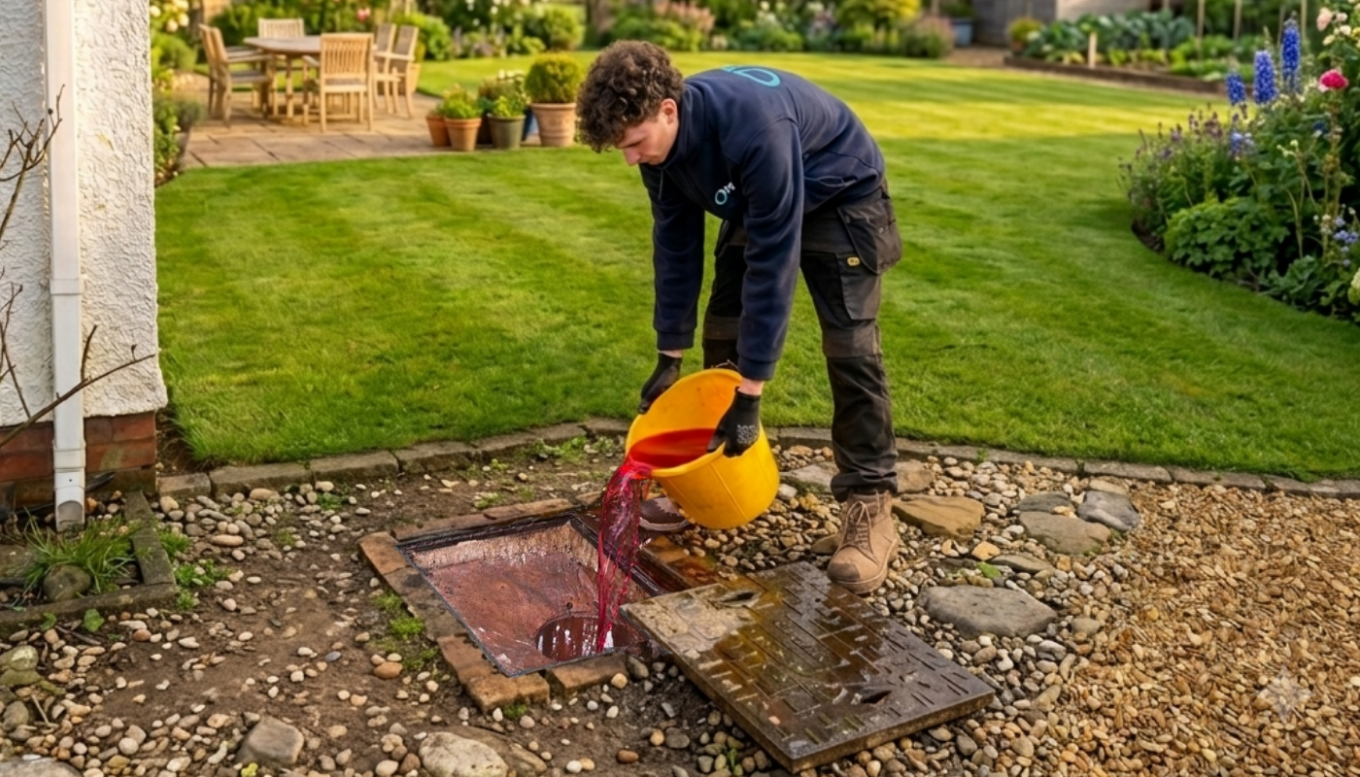
The process involves introducing a non-toxic, biodegradable coloured dye into the drainage system – through a sink, toilet, or external drain – and then tracking where it appears. By monitoring manholes and inspection points downstream, we can map exactly how the system is connected, identify any misrouted flows, and spot potential issues before they become serious problems.
The dye itself is harmless to the environment and to the drainage network. It’s simply a way to make invisible water visible.
When Do We Use It?
Drain dye testing is particularly useful in a number of situations:
- – Compliance surveys, where we need to confirm drainage routes and connections meet regulatory requirements
- – Pre-purchase investigations, where a buyer wants to understand the drainage layout of a property before committing
- – Tracing misconnections, where foul water may be entering surface water drains — or vice versa
- – Diagnosing unexplained drainage problems, where the cause isn’t immediately obvious
It’s a fast, cost-effective technique that removes the guesswork from drainage investigations.
Part of a Bigger Picture
Dye testing rarely works in isolation. At WCI, we often combine it with drain mapping and CCTV surveys to build a comprehensive picture of a property’s drainage system. Together, these techniques give us and our clients the confidence to make informed decisions about what needs to be done.
See how a home buyer survey led to an emergency STP installation after builders destroyed the drainage field.
If you’re dealing with a drainage issue you can’t get to the bottom of, or you need a compliance survey carried out, our team is here to help.
Get in touch with WCI’s Wastewater Engineers
 Blog - General