 Blog - Off-Mains
November 3, 2025
Dos and Don’ts – To Keep Your System Healthy
read more
With one of the mildest and wettest winters on record and groundwater levels extremely high, it’s perhaps no surprise that we’re dealing with an increase in soakaway and drainage field failures. If your property relies on disposal of your treated wastewater (post your sewage treatment plant or septic tank) into the ground by a soakway […]
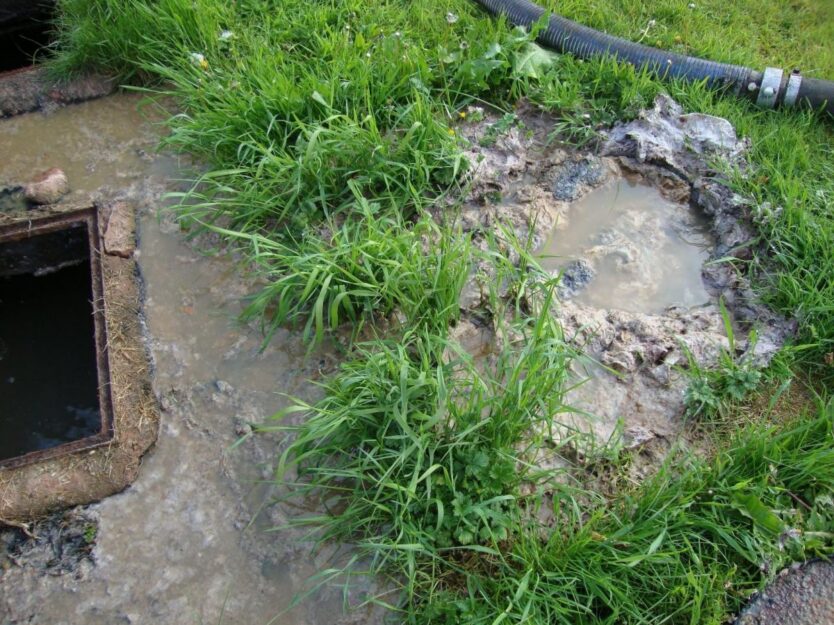
With one of the mildest and wettest winters on record and groundwater levels extremely high, it’s perhaps no surprise that we’re dealing with an increase in soakaway and drainage field failures.
If your property relies on disposal of your treated wastewater (post your sewage treatment plant or septic tank) into the ground by a soakway or drainage field, there will be problems at some stage. A drainage field or soakaway has a finite lifespan which can range from months to decades depending on the design, installation and maintenance of the system.
When most people call WCI to report a problem with their septic tank very few people realise that in most cases it is their drainage field that is the problem not their tank.
The first signs typically are:
The most common reasons for drainage field failure are:
Under storm conditions, where roof water is connected into the foul drain and enters the septic tank, settled sludges within the septic tank are mixed up and carried out into the drainage field causing blockages.
When an engineer designs a drainage field, they should undertake porosity tests and groundwater monitoring to ascertain where the water table sits in the winter months and how good the soil is at draining water through it. Where an area suffers from clay based soils and/or a high-water table the functionality of a drainage field might not be viable or legal.
How many times do we hear “Oh I’ve never had my septic tank emptied!”. A septic tank acts to settle out raw sewage allowing the clear water to enter the drainage field. The more sludge within a preceding tank, the less clear water there is available to flow through into the drainage field. Therefore solids start carrying over into the drainage field and can cause blockages.
Often we visit a property with a problematic drainage field and find the septic tank dip pipe no longer present. Sometimes it has broken off and now resides at the bottom of the tank. The outlet dip pipe acts to stop floating material in the septic tank travelling through to the drainage field. If it is not present, solids can migrate into the drainage field causing blockages.
We do just come across private drainage systems that are undersized for the property. When any part of the septic tank/drainage field system is undersized, the result is often a failed drainage field.
In some instances, having the drainage field jetted and resulting water emptied from the system can prolong the life of the drainage field. But usually only for a few months.
The most common solution is to replace the drainage field. Please note that the new drainage field will need to be installed in a new position from the original. Any drainage field should be designed using BS6297:2007 + A1: 2008 Code of Practice for the design and installation of drainage fields for use in wastewater treatment. Porosity testing must be carried out to design and price for a new drainage field.
Find more information on the installation of drainage fields or call the office on 01984 623404.

Contact one of our specialist across our four divisions
Get in Touch