Septic Tank vs. Sewage Treatment Plant: What’s the Difference?
Sewage treatment plants treat water more thoroughly compared to septic tanks, and the General Binding Rules apply differently depending on how they discharge effluent.
If your property has a septic tank or sewage treatment plant, you are typically responsible for its maintenance. This generally applies if you own the property, share the system with others, or have an agreement with the owner stating you are responsible. Knowing the difference between these systems and understanding if you need an upgrade will help you know if your system is compliant, and if it operates properly.
What Is a Septic Tank?
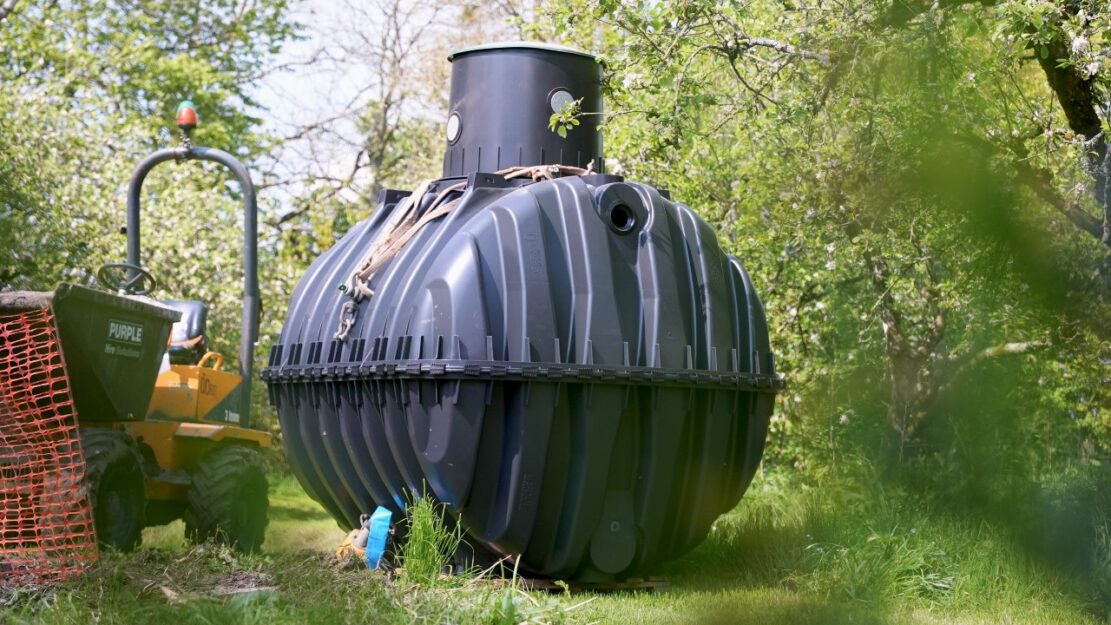
A septic tank, sometimes referred to by the manufacturer such as Klargester and Graf, is a type of non-mains solution often buried underground and acting as a passive tank that separates solids from wastewater. This means that solids settle in the tank, breaking down at the bottom, which then allows scum to float to the top. The liquid in between, called effluent, then flows out. Tanks can be made from concrete, brick, fiberglass or plastic.
This process involves no mechanical treatment, no power, and no moving parts, meaning the tank effluent is only partially treated. Because of this, the effluent must discharge through a drainage field, which is a network of perforated pipes that allow it to filter through the surrounding stone and into the soil for natural treatment.
This effluent should never be discharged directly into a ditch, river, or stream due to the pollution it can cause. This is a regulation enforced by the Environment Agency.
What Is a Sewage Treatment Plant?
A sewage treatment plant, also known as a package treatment plant, does everything a septic tank does, but it includes water treatment. This is done by using an active biological or aerobic treatment stage. Manufacturers include Marsh, Klargester, Graf, and Tricel.
These systems operate by introducing oxygen to the environment inside, encouraging bacteria to break down waste more efficiently than a septic tank’s process. This can be done by active aeration, use of a blowers or passive aeration by mechanically turning the bacteria through the water and then the air.
The effluent created by this process is cleaner, having been treated according to BS EN 12566 standards which dictates the requirements for domestic wastewater treatment systems. Because the effluent is cleaner, a sewage treatment plant can release water into a river, stream, or ditch, and into a drainage field.
A sewage treatment plant needs electricity to run and has moving parts like blowers and motors, meaning that it needs regular servicing compared to a septic tank which typically only needs emptying.
Key Differences at a Glance
Septic Tank
Sewage Treatment Plant
Treatment Method
Passive settlement only
Active biological or aerobic treatment
Power Needed?
No (unless pumped discharge)
Yes
Effluent Quality
Partially treated
High-quality treatment
Where Can It Discharge?
Drainage field only
Drainage field or watercourse
Servicing
Emptying only
Emptying plus mechanical servicing
Which Is Legal Under the General Binding Rules?
According to the current guidance published by the Environment Agency, if a septic tank discharges directly into a watercourse, it does not meet the GBR.
Failing to meet these regulations means your septic tank is non-compliant, which may be considered as committing an offence. If you discover your septic tank isn’t compliant, you will need to do one of three things as soon as possible:
– Connect to a public foul sewer.
– Replace the septic tank with a sewage treatment plant.
– Install a drainage field or soakaway so the tank discharges into the ground instead.
If your septic tank discharges into a drainage field, it doesn’t require an upgrade, provided it meets other rules under the GBR. Some of these rules mean it will need to be the correct British Standard, have adequate capacity, require regular servicing and emptying, contribute no pollution, and not be within 500m of a protected site.
A sewage treatment plant can legally discharge into a watercourse under the GBR, unlike a septic tank. This is why upgrading your septic tank to a sewage treatment plant if discharging to a ditch is a standard option to remain compliant.
Regardless of the type of system you have, the GBR only covers discharges of 2,000 litres or less to around 5,000 litres a day or less to a watercourse. If your system discharges more than that, you will need a permit from the Environment Agency.
If you are planning on selling your property that has a sewage system, you have a legal obligation to inform potential buyers. This also means that if you’re purchasing a property with a sewage system, you must be informed by the previous owner about the system’s presence. This includes its description, location, and maintenance details.
When You Might Need to Upgrade to a Sewage Treatment Plant
Due to the changes to the Environment Agency’s GBR, many homeowners are making the switch from septic tanks to sewage treatment plants. To know whether or not you should upgrade, our list of potential triggers can help you decide.
Your septic tank currently discharges directly into a ditch, stream, river, or similar watercourse.
– You are buying or selling a property, and you learn about the poor state of the septic tank.
– You are extending your property and adding another bathroom, increasing the load of wastewater beyond what the tank was sized for.
– Your tank is old, undersized, or the drainage field has failed and is causing pooling, foul odours or needs to be emptied frequently.
– Building work has damaged or disturbed the drainage field.
If you believe your circumstances match one of these triggers, you should speak to an expert about upgrading your system.
Cost Comparison Overview
There is no fixed price for installing either a septic tank or sewage system, because each will be adjusted to suit the size of the site, the access required, and current ground conditions. However, there are some facts around the pricing to consider:
– Septic tanks have a lower cost to buy and install due to having no electrics and simpler groundworks, but the cost can come from installing or replacing a drainage field or separating cross-connected rainwater connected to your foul drains.
– Sewage treatment plants have a higher upfront cost due to electrical mechanisms and complex installation, and have a small ongoing cost for power.
– Both require periodic emptying, dictated by size of the system, occupancy levels, diet of the occupants and discharge quality required.
– Sewage treatment plants require annual mechanical servicing that septic tanks don’t need, unless the system has a discharge pump fitted
Which Wastewater Treatment System Is Better For You?
Understanding which system is best for you will depend on many factors, including:
– If the site has enough appropriate land for a drainage field.
– Access to a watercourse.
– Whether mains power is available to use.
– Your budget for installation versus ongoing running costs.
– Seasonality of flow and required treatment quality.
If you’re not certain, having a site assessment and speaking to an expert about the best option for you is better than simply guessing.
WCI’s Role
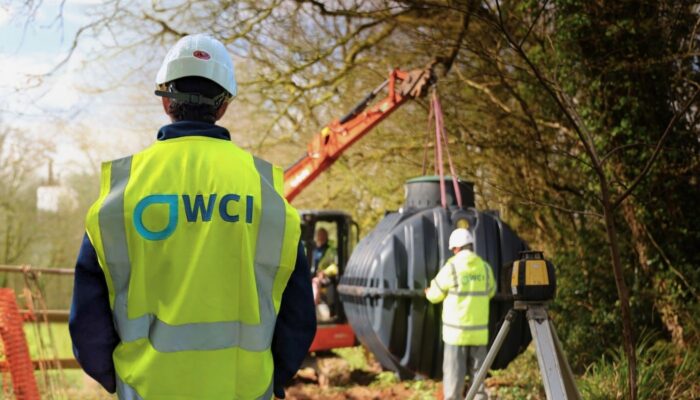
Our engineers are backed by 40+ years of experience, providing professional installation services across South West England. Our WCI team can carry out a compliance survey on your existing system and tell you exactly what you have and if it’s a compliant system. We can cost a replacement and also install a new septic tank or sewage treatment system manufactured by industry-leading brands like Marsh, Fujiclean, , Klargester and Graf.
If you require an upgrade, we will handle the Building Regulation and Environment Agency permit requirements. We’ll keep your system running with planned and reactive maintenance afterwards, helping you stay compliant and maintaining your system.
Frequently Asked Questions
Can I convert my septic tank into a sewage treatment plant?
In most cases, a simple retrofit won’t work. Conversion units and reedbeds fitted after 2007 don’t meet the current GBR unless they carry the relevant British Standard certification and operate under an EA permit. If you need to change your system, you should replace it with a package sewage treatment plant rather than converting it.
Do I need planning permission for a sewage treatment plant?
Normally, you’ll need Building Regulations approval for a new sewage treatment plant, and depending on the location of the installation, you may need planning permission too. Typically all installations in National Parks require permitting, we can assist as part of the installation process.
How often does a septic tank need emptying compared to a sewage treatment plant?
Both systems will need to be emptied according to the tank size, household use and occupation. You should always check the manufacturer’s guidance for the exact interval either way.
Is a sewage treatment plant more expensive to run than a septic tank?
Partially. A sewage treatment plant needs mains power to operate its blower, motor or pump, so there is an ongoing cost, plus a mechanical service every year.
Can a septic tank discharge into a stream or river?
No. Under the Environment Agency’s GBR, if a septic tank discharges into a watercourse, the system is non-compliant. You can only run from a septic tank into a drainage field. If your system currently runs directly into a ditch, stream, or river, it isn’t compliant, and you must either connect it to a sewer, install a drainage field, or upgrade it to a sewage treatment plant.
 Blog - General